

Sunday, July 29, 2012

Tuesday, June 5, 2012
Fingertip

I think I have a new favourite website. The Smithsonian Ocean Portal. I have had oceans on the brain for months, and now I know what I will be doing with all my free time for months to come.
This photograph miraculously depicts nine (NINE!!) different animals all collected by Smithsonian researchers involved in the Deep Reef Observation Project. Collected 60m (~200 ft) near Curaçao in the southern Caribbean, these gastropods and echinoderms are just a tiny (literally) example of the diversity of life in the oceans.
The article accompanying this photo, written by Cristina Castillo, also mentions The Census of Marine Life, "a 10-year international effort undertaken in to assess the diversity (how many different kinds), distribution (where they live), and abundance (how many) of marine life—a task never before attempted on this scale."
For more information and some mind boggling statistics, have a look at this.
For some mind boggling images please look here.
There is a post in the works on the Census for Marine Life.....
Hopefully coming this week.
Monday, May 28, 2012
Obvious


Sunday, May 13, 2012
Wunderkammer

Well, here in Vancouver it feels like spring. And summer is on its way.

And this work seems so appropriate right now.
Regine Ramseier is an artist in Switzerland. Her, work varies across mediums, from watercolour to soft sculpture to mixed media installations involving materials from the natural world. In Windstille, which translates to calm, she has painstakingly collected hundreds of dandelions. These she suspends from the ceiling of a gallery and the results are beautiful.

The soft dandelion seed heads create a beautiful avenue leading up to a window and the green space beyond.


Monday, May 7, 2012
Raw Colour
But what a beautiful project this is.
Raw Color describes this project, or series of projects, as A visual research about vegetables and their powerful color. Vegetables are dismantled and purified to their visual essence 'RAW COLOR'.
For the exhibition Dutch Domestics at the Museum für Angewandte Kunst in Frankfurt the installation Liquid Palette was created. The installation is composed a cabinet holding 130 containers of pigment derived from vegetables. The pigments are both pure mixed in different ratios.


The juice causes a stripe in each of the images.


Sunday, February 26, 2012
Brookesia Micra
Well, this little mite has been all over the internet recently, but I couldn't resist.
 Why am I, and assume by extension is everyone else, so obsessed with tiny creatures?I suppose that they seem so impossible. Something so complex in a package so minute. All aesthetics and heart shrinking feelings aside, the tiny chameleon, more correctly the Pygmy Leaf Chameleon is found in Madagascar, along with a host of fascinating creatures, including lemurs (all the lemurs, they are found nowhere else) and was once home to the now extinct Elephant Bird. Madagascar also has an interesting history, and language. An amazing description of the island can be found in the introduction of Last Chance to See by Douglas Adams. One of my favourite books of all time.
David Attenborough also seems pretty fond of the chameleon:
The Brookesia micra is the smallest chameleon in the world, part of an entire family of miniature sized leaf chameleons, the Brookesia Minima group.
Why am I, and assume by extension is everyone else, so obsessed with tiny creatures?I suppose that they seem so impossible. Something so complex in a package so minute. All aesthetics and heart shrinking feelings aside, the tiny chameleon, more correctly the Pygmy Leaf Chameleon is found in Madagascar, along with a host of fascinating creatures, including lemurs (all the lemurs, they are found nowhere else) and was once home to the now extinct Elephant Bird. Madagascar also has an interesting history, and language. An amazing description of the island can be found in the introduction of Last Chance to See by Douglas Adams. One of my favourite books of all time.
David Attenborough also seems pretty fond of the chameleon:
The Brookesia micra is the smallest chameleon in the world, part of an entire family of miniature sized leaf chameleons, the Brookesia Minima group.
 The Brookesia is not only near impossible to see due to its size, like all chameleons it is able to change colour to blend in with its surroundings.
If threatened the chameleon will 'play dead' hoping to be mistaken for some sort of dry leaf.
The Brookesia is not only near impossible to see due to its size, like all chameleons it is able to change colour to blend in with its surroundings.
If threatened the chameleon will 'play dead' hoping to be mistaken for some sort of dry leaf.
 Like most of the creatures on Madagascar, they are listed as a threatened species.


Monday, February 13, 2012
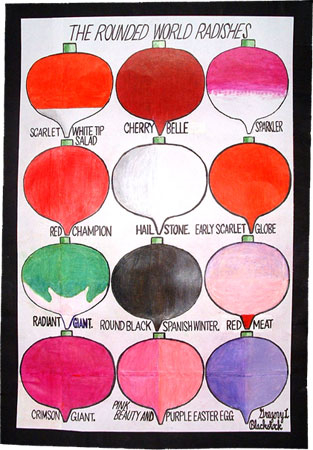
Blackstock




Subscribe to:
Posts (Atom)